
Bringing medication on board doesn’t have to be stressful — as long as you understand airline and customs regulations. This guide explains which medicines can go in your carry‑on, which should be checked, and what documentation you’ll need to avoid issues during security or at international borders.
I. Two Core Principles
When deciding how to pack your medication, keep these two rules in mind:
1️⃣ Is it essential during the flight?For example, insulin or emergency medication (e.g., angina tablets) must stay with you, while common cold medicine can go in checked luggage.
2️⃣ What form is it in?Solid (tablets/capsules), liquid (syrups/gels), or special items (needles, alcohol‑based products) follow different security rules.
II. Carry‑On vs. Checked: Category by Category
The table below summarizes what can be carried on, what must be checked, and what proof you may need.

III. Required Medical Documentation
To pass security smoothly, prepare both originals and photocopies of the following when applicable:
• Liquid medication (required inflight): Hospital certificate issued within 72 hours, signed and stamped, specifying passenger name, dosage, and necessity.
• Controlled or narcotic substances / insulin: Doctor’s prescription (preferably with English translation) clearly marked ‘long‑term use, personal quantity.’
• Chronic condition medication (e.g., hypertension, diabetes):If carrying more than one‑month supply, include a copy of medical records or physician’s note.

cr:pexels
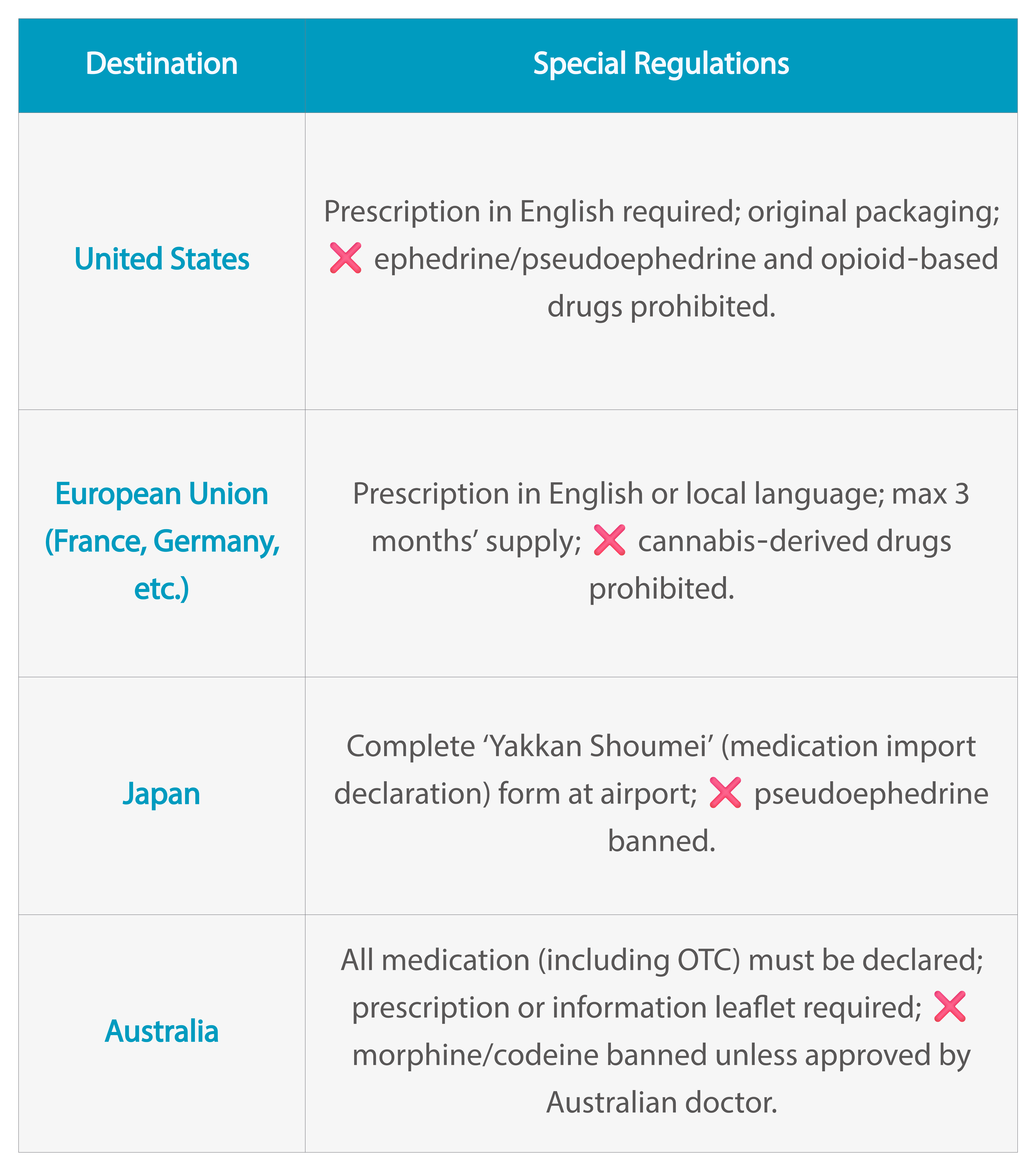
IV. Country‑Specific Import Rules
Medication control policies vary by destination. Always verify before travel. Below are highlights from major regions:
V. Three Key Tips to Avoid Problems
1️⃣ Keep original packaging: Labels with drug names and ingredients help avoid confusion during inspection.
2️⃣ Do not exceed quantity limits:Non‑prescription medicine — 1–2 months’ supply; prescription medicine — as per your doctor’s written dosage.
3️⃣ Check import restrictions in advance: Visit your destination’s customs website or contact the airline to confirm banned or restricted substances.
VI. Final Advice
With proper documentation and careful packing, carrying medication on flights is straightforward. Follow the rules above to ensure hassle‑free security screening and border entry, keeping both your health and your travel plans on track.
Produced by Health Express Team
Content Development: Distinct Health Express Editorial Team
Professional Review: Distinct Health Express Medical Team
This article was initially drafted with AI assistance, refined by editors, and finalized following professional review by physicians.
This is original content by Distinct Healthcare, provided for informational purposes only and not intended as medical advice. For personalized guidance, consult a qualified physician.
Contact Email:health_content@distincthealth.com