
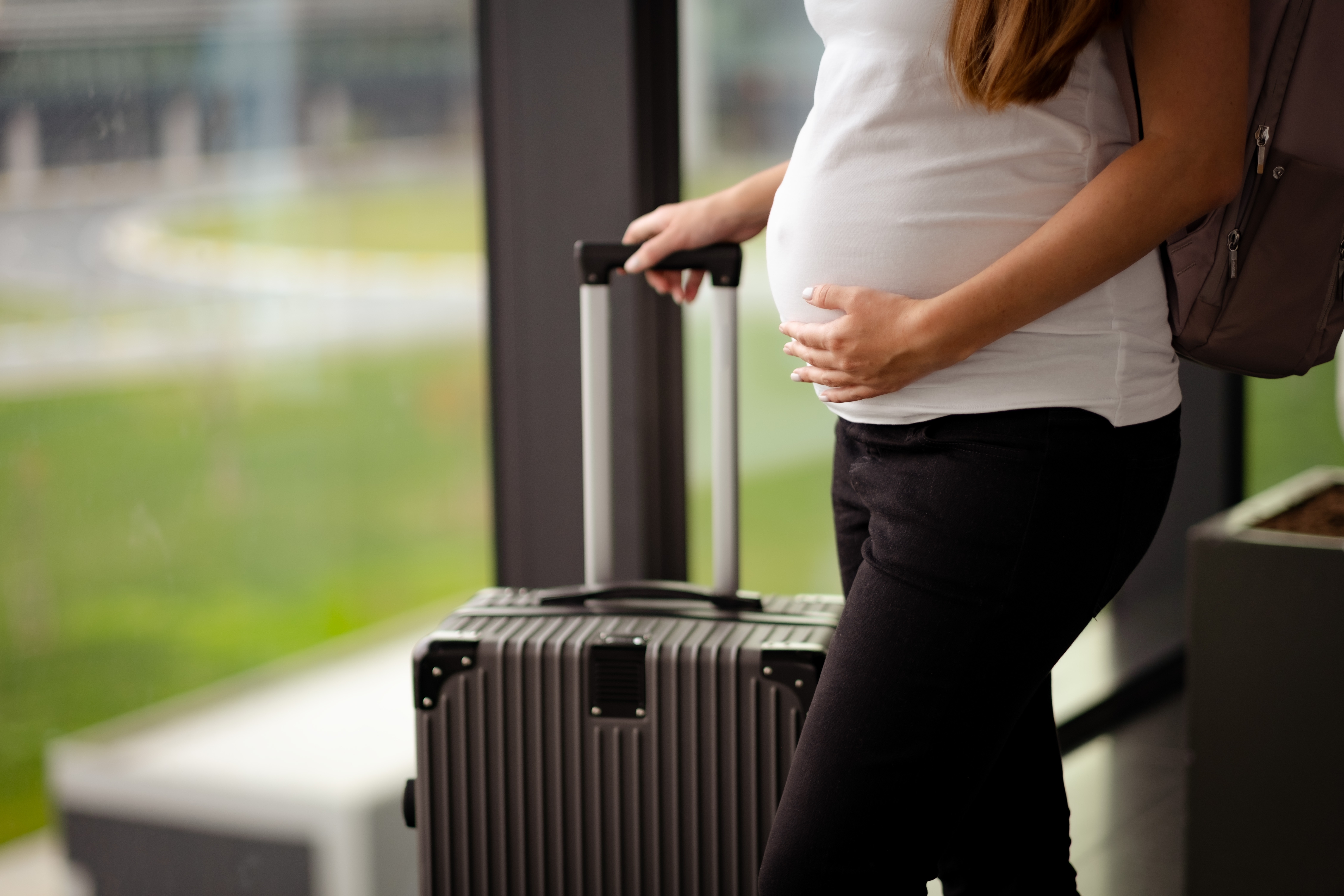
Pregnant travelers can fly safely in most cases if they plan properly and follow medical guidance. This guide explains when it’s safe to fly, what documents are required, and how to protect yourself during the journey — so you can travel with peace of mind.
I. How Far Along Can You Fly?
Airlines differ slightly, but most follow similar medical safety rules:
• Before 28 weeks: Generally safe to fly if there are no complications.
• 28–34 weeks: You must carry a medical certificate issued within 7 days before departure, stating your gestational age and that you are fit to fly.
• After 34 weeks: Most airlines will refuse boarding for safety reasons.
Always check your airline’s pregnancy policy before booking.
II. Required Documentation
To avoid boarding issues, prepare the following:
1️⃣ Medical certificate – from your obstetrician or hospital, dated within 7 days before travel. It must clearly indicate your expected due date, pregnancy stage, and that you are fit to fly.
2️⃣ Prenatal records or ultrasound report – sometimes requested for verification.
3️⃣ Doctor’s emergency contact information – useful in case of inflight consultation or overseas communication.
III. How to Fly Safely
• Choose the right time: The second trimester (14–28 weeks) is considered the safest period for air travel.
• Book aisle seats:Easier access to restrooms and allows movement to reduce swelling.
• Wear compression socks: Helps prevent deep vein thrombosis (DVT) on long flights.
• Stay hydrated: Drink plenty of water and avoid caffeine.
• Walk or stretch every hour:Promotes blood circulation and reduces back strain.
• Fasten the seatbelt under your belly: Keep it low across the hips, not over the abdomen.

cr:pexels
IV. Inflight and Airport Tips
• Request early boarding: Most airlines allow priority boarding for expectant mothers.
• Avoid lifting heavy luggage: Ask cabin crew for assistance when placing or removing bags.
• Adjust cabin pressure effects:Mild ear pressure and bloating are normal; yawning, chewing gum, or drinking water helps.
• Bring light snacks:Avoid long periods of hunger that may cause low blood sugar.
• Carry essential items: Prenatal vitamins, light shawl, small pillow, and hand sanitizer.
V. When to Avoid Flying
Consult your doctor before travel and avoid flying if you have:
• High‑risk pregnancy (placenta previa, pre‑eclampsia, gestational diabetes)
• Multiple pregnancy after 28 weeks
• Recent vaginal bleeding, premature contractions, or rupture of membranes
• Serious anemia or other cardiovascular conditions
VI. Insurance and Emergency Considerations
• Travel insurance: Choose a policy that covers pregnancy‑related complications and emergency medical evacuation.
• Destination healthcare: Identify hospitals near your destination that can handle maternity emergencies.
• Medication: Bring your regular prenatal supplements and carry them in your hand luggage.
• Emergency contacts: Save airline medical desk and local emergency numbers before departure.
VII. Key Takeaway
Flying during pregnancy is safe when properly planned. The key is communication — confirm with your doctor and airline, prepare documentation, and prioritize comfort and hydration. With the right precautions, expectant mothers can travel confidently and safely.
Pregnant travelers can fly safely in most cases if they plan properly and follow medical guidance. This guide explains when it’s safe to fly, what documents are required, and how to protect yourself during the journey — so you can travel with peace of mind.
I. How Far Along Can You Fly?
Airlines differ slightly, but most follow similar medical safety rules:
• Before 28 weeks: Generally safe to fly if there are no complications.
• 28–34 weeks: You must carry a medical certificate issued within 7 days before departure, stating your gestational age and that you are fit to fly.
• After 34 weeks: Most airlines will refuse boarding for safety reasons.
Always check your airline’s pregnancy policy before booking.
II. Required Documentation
To avoid boarding issues, prepare the following:
1️⃣ Medical certificate – from your obstetrician or hospital, dated within 7 days before travel. It must clearly indicate your expected due date, pregnancy stage, and that you are fit to fly.
2️⃣ Prenatal records or ultrasound report – sometimes requested for verification.
3️⃣ Doctor’s emergency contact information – useful in case of inflight consultation or overseas communication.
III. How to Fly Safely
• Choose the right time: The second trimester (14–28 weeks) is considered the safest period for air travel.
• Book aisle seats:Easier access to restrooms and allows movement to reduce swelling.
• Wear compression socks: Helps prevent deep vein thrombosis (DVT) on long flights.
• Stay hydrated: Drink plenty of water and avoid caffeine.
• Walk or stretch every hour:Promotes blood circulation and reduces back strain.
• Fasten the seatbelt under your belly: Keep it low across the hips, not over the abdomen.
cr:pexels
IV. Inflight and Airport Tips
• Request early boarding: Most airlines allow priority boarding for expectant mothers.
• Avoid lifting heavy luggage: Ask cabin crew for assistance when placing or removing bags.
• Adjust cabin pressure effects:Mild ear pressure and bloating are normal; yawning, chewing gum, or drinking water helps.
• Bring light snacks:Avoid long periods of hunger that may cause low blood sugar.
• Carry essential items: Prenatal vitamins, light shawl, small pillow, and hand sanitizer.
V. When to Avoid Flying
Consult your doctor before travel and avoid flying if you have:
• High‑risk pregnancy (placenta previa, pre‑eclampsia, gestational diabetes)
• Multiple pregnancy after 28 weeks
• Recent vaginal bleeding, premature contractions, or rupture of membranes
• Serious anemia or other cardiovascular conditions
VI. Insurance and Emergency Considerations
• Travel insurance: Choose a policy that covers pregnancy‑related complications and emergency medical evacuation.
• Destination healthcare: Identify hospitals near your destination that can handle maternity emergencies.
• Medication: Bring your regular prenatal supplements and carry them in your hand luggage.
• Emergency contacts: Save airline medical desk and local emergency numbers before departure.
VII. Key Takeaway
Flying during pregnancy is safe when properly planned. The key is communication — confirm with your doctor and airline, prepare documentation, and prioritize comfort and hydration. With the right precautions, expectant mothers can travel confidently and safely.
Produced by Health Express Team
Content Development: Distinct Health Express Editorial Team
Professional Review: Distinct Health Express Medical Team
This article was initially drafted with AI assistance, refined by editors, and finalized following professional review by physicians.
This is original content by Distinct Healthcare, provided for informational purposes only and not intended as medical advice. For personalized guidance, consult a qualified physician.
Contact Email:health_content@distincthealth.com