Healthcare Guide for
International Students
in Malaysia
From campus clinics to hospitalisation — navigating costs, coverage, and the GL Letter process
Worried about medical bills during your studies? Malaysia's mandatory student health insurance covers 23 designated hospitals. This guide walks you through every scenario — so you know what to do, what to bring, and how to avoid paying out of pocket.
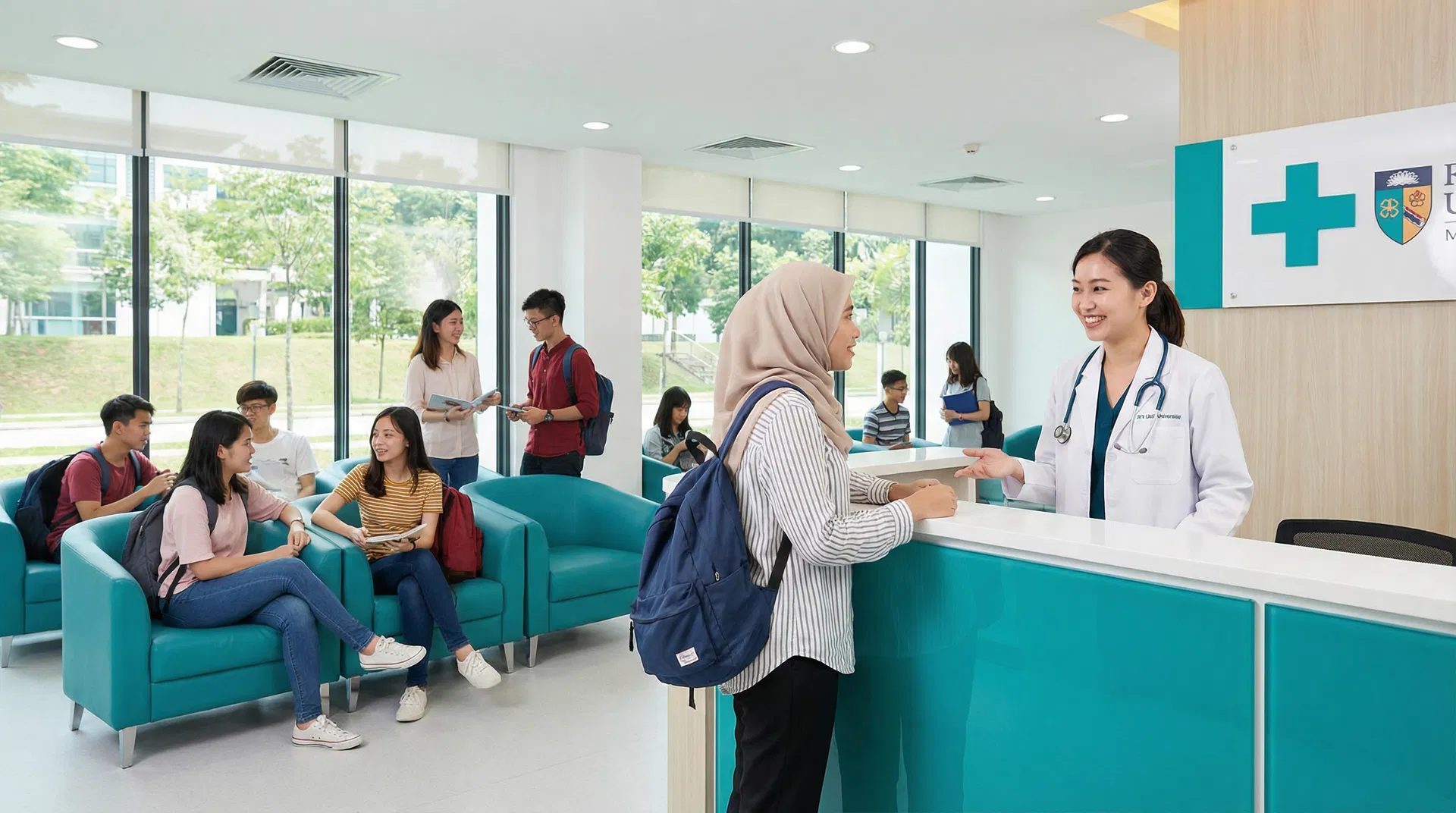
- No appointment required; walk in on weekdays and you will typically be seen on the same visit
- Many campus doctors speak Mandarin or Cantonese — describing symptoms in Chinese is usually straightforward
- Consultations and medication are included in campus medical services at no additional charge
- If further investigation is needed (blood tests, imaging), the doctor issues a referral letter, enabling direct use of your student insurance at the designated hospital
- The right option when the campus clinic is closed or you wish to see a specific Chinese-speaking doctor
- Must be an EMGS-recognised clinic (Education Malaysia Global Services) to qualify for insurance coverage
- A Guarantee Letter (GL) allows insurance to settle the bill directly with the clinic — you pay nothing upfront
- Call ahead to confirm: "Does this clinic accept student insurance?" and "Is a Chinese-speaking doctor available?"
- For emergencies, hospitalisations, and surgery: costs at public hospitals are largely covered by the student insurance policy, with minimal out-of-pocket expenses
- Private hospitals: request a GL before or promptly after admission; the insurer will confirm coverage and settle directly with the hospital
- Both public and private hospitals operate 24-hour emergency departments; no appointment needed
- Major public hospitals such as Hospital Kuala Lumpur have an International Patient Service Desk offering Chinese translation assistance
What the insurance covers
- Outpatient consultations (on-campus clinic and EMGS-recognised off-campus clinics)
- Hospitalisation, surgery, and post-operative follow-up
- Routine investigations (blood tests, X-rays, ultrasound)
- Emergency treatment and ambulance costs
Typically not covered
- Over-the-counter health supplements (vitamins, nutritional products)
- Dental and optical treatment (some policies include partial coverage — check your schedule)
- Pre-existing conditions (waiting periods may apply — review your policy at enrolment)
- Consultations at clinics not on the EMGS-recognised list
Scenario 1: Minor Illness — Start with the On-Campus Clinic
Scenario 2: Off-Campus GP Clinic — The GL Letter Is the Critical Step
Scenario 3: Hospitalisation or Emergency — Public and Private Hospitals Handled Differently
Public Hospital
- Go directly to the A&E department with your passport, insurance card, and student card; the nurse will triage you by severity
- Bed fees, medication, and routine investigations (blood tests, X-rays) are covered by the student insurance policy; personal out-of-pocket costs are typically minimal
- Wait times can be longer — this is the trade-off for comprehensive public coverage — but the standard of care is professional and reliable
Private Hospital
- Request a GL as early as possible — before or immediately after admission; your insurer confirms coverage and settles directly with the hospital
- At discharge, you pay only the items not covered by your policy (e.g., certain imported medications) — confirm these in advance with your treating doctor
- Shorter wait times and a more private environment — well-suited for non-emergency planned admissions
| Hospital | City | Type | Key Features |
|---|---|---|---|
| Hospital Kuala Lumpur (HKL) 吉隆坡中央医院 |
Kuala Lumpur | Public | Malaysia's largest public teaching hospital; International Patient Service Desk provides Chinese translation; student insurance coverage is comprehensive |
| Subang Jaya Medical Centre (SJMC) 苏邦再也医疗中心 |
Shah Alam | Private | Conveniently located near several universities; high proportion of Chinese-heritage doctors; JCI-accredited with internationally recognised standards of care |
| Prince Court Medical Centre 太子阁医疗中心 |
Kuala Lumpur | Private | Previously ranked among the world's best hospitals by International Traveller; comprehensive medical interpretation services; suitable for students requiring specialist consultations |
| Hospital Pulau Pinang 槟城中央医院 |
Penang | Public | Largest public hospital in Penang; high proportion of Chinese-heritage medical staff reflecting the region's demographics; student insurance accepted |
Student Healthcare — Three Rules That Cover Every Situation
- 1Start with the on-campus clinic for minor illness. Free, usually staffed by Chinese-speaking doctors, and minimal waiting time. If the clinic cannot resolve your issue, they will issue a referral letter — which opens the door to insurance-covered treatment at a designated hospital.
- 2Always request a Guarantee Letter at off-campus clinics and hospitals. This single step eliminates upfront payment and the need for a separate reimbursement claim. Every off-campus visit should begin by confirming the clinic is EMGS-recognised and that a GL can be processed.
- 3Your insurance quota resets annually — use it before it expires. Visit an EMGS-recognised pharmacy before your visa renewal to stock up on essential medicines. It is a practical way to make full use of coverage you have already paid for.
This article was initially drafted with AI assistance, refined by our editorial team, and finalised following professional review by Distinct Healthcare physicians.
This is original content by Distinct Healthcare, provided for informational purposes only and not intended as medical advice. Insurance coverage is subject to the terms of your specific policy. For personalised guidance, please consult a qualified physician.
Contact: health_content@distincthealth.com